What keeps people going when nobody tells them what to do?

That question runs through everything I make. For twenty years I designed live games where hundreds of players wrote the story themselves. Now I build with AI: Panache is a gamebook where playing writes an illustrated book, cultivated by an AI director. It lets you design your character by deciding on their childhood and youth memories.

Game designer and product leader. Master’s research in AI-assisted narrative at Aalborg University.

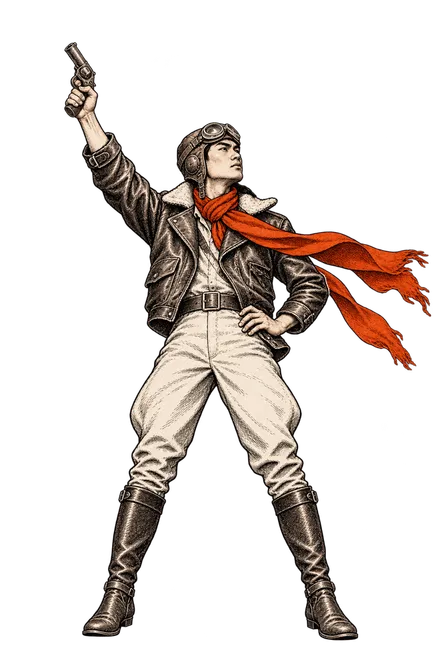
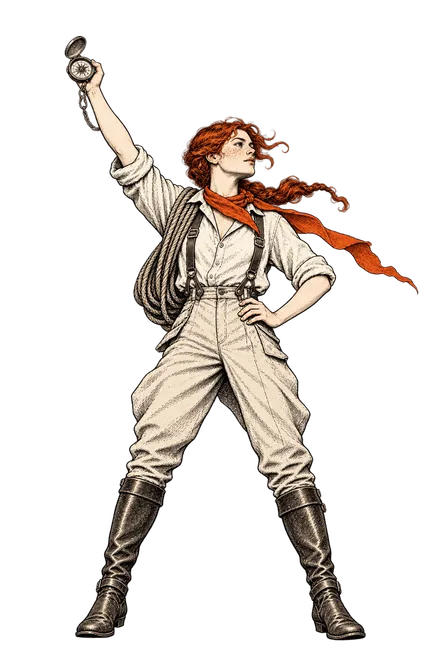
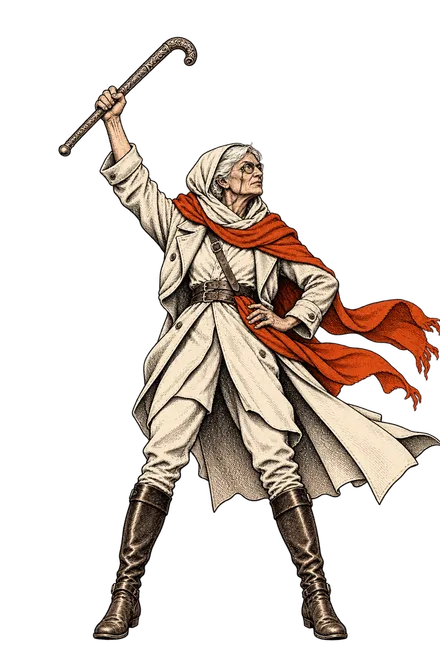
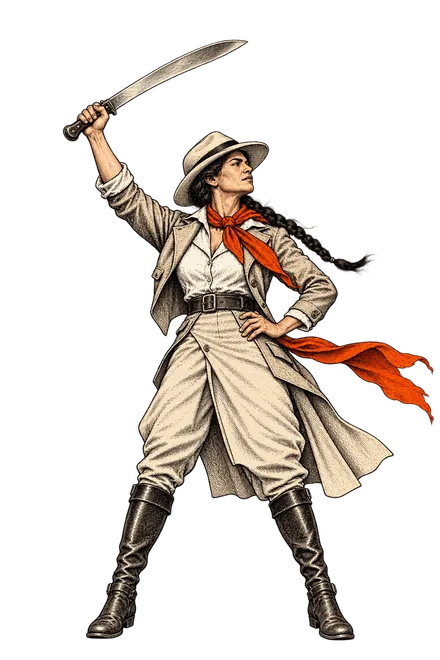
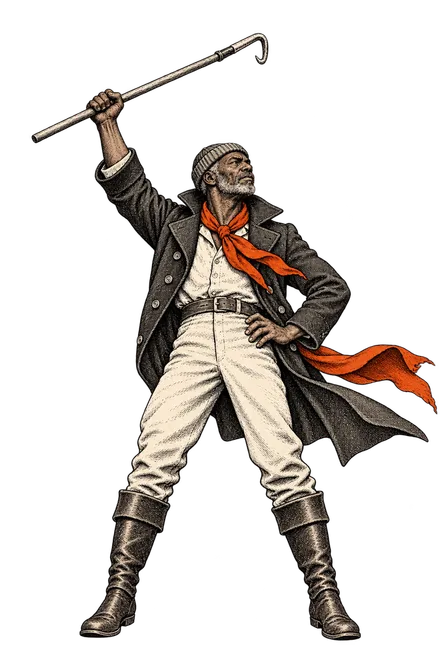
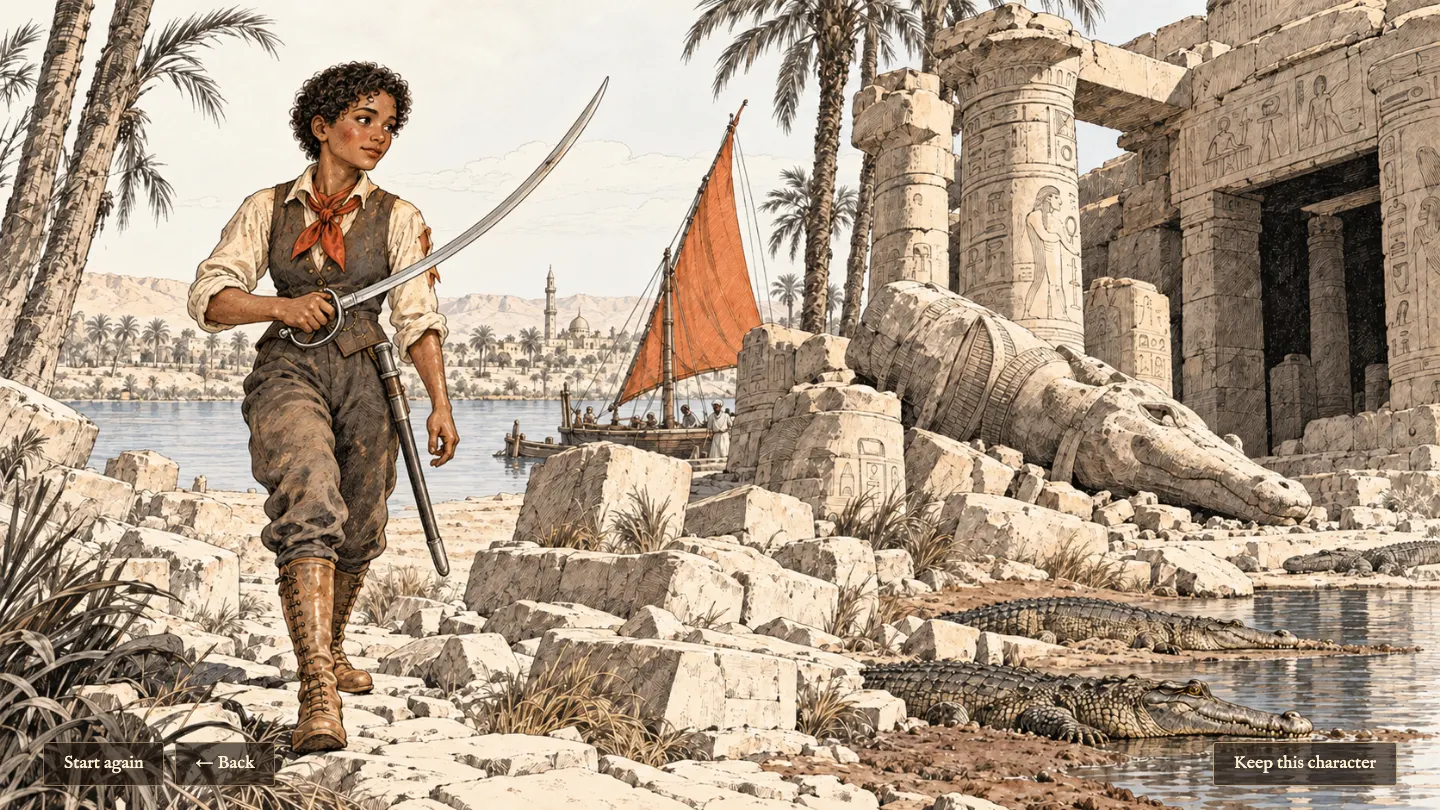
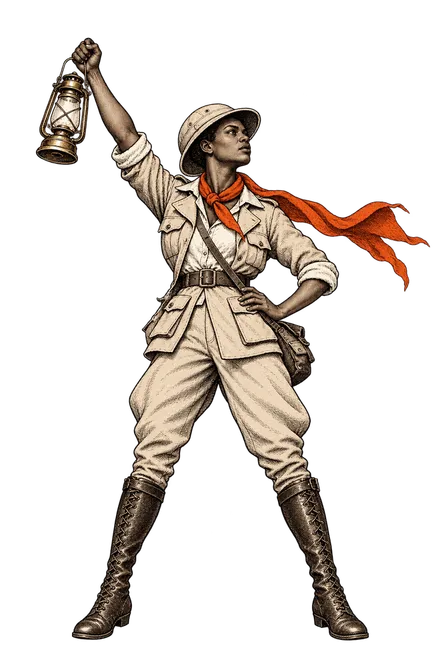
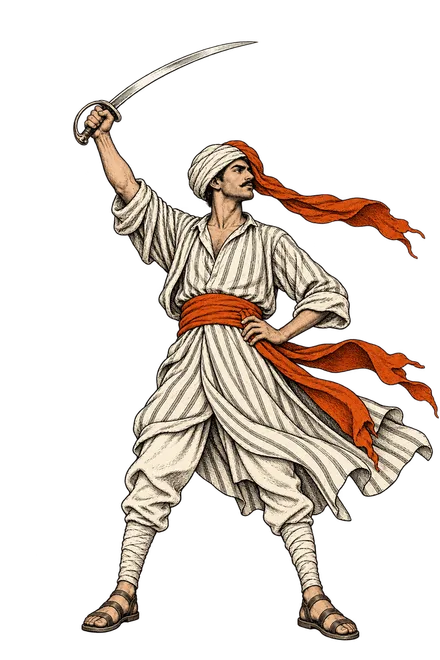
Heroes from Panache. The prologue alone draws its hero in 578 pictures, across twelve faces and 373,248 ways through it.

Choose a life.

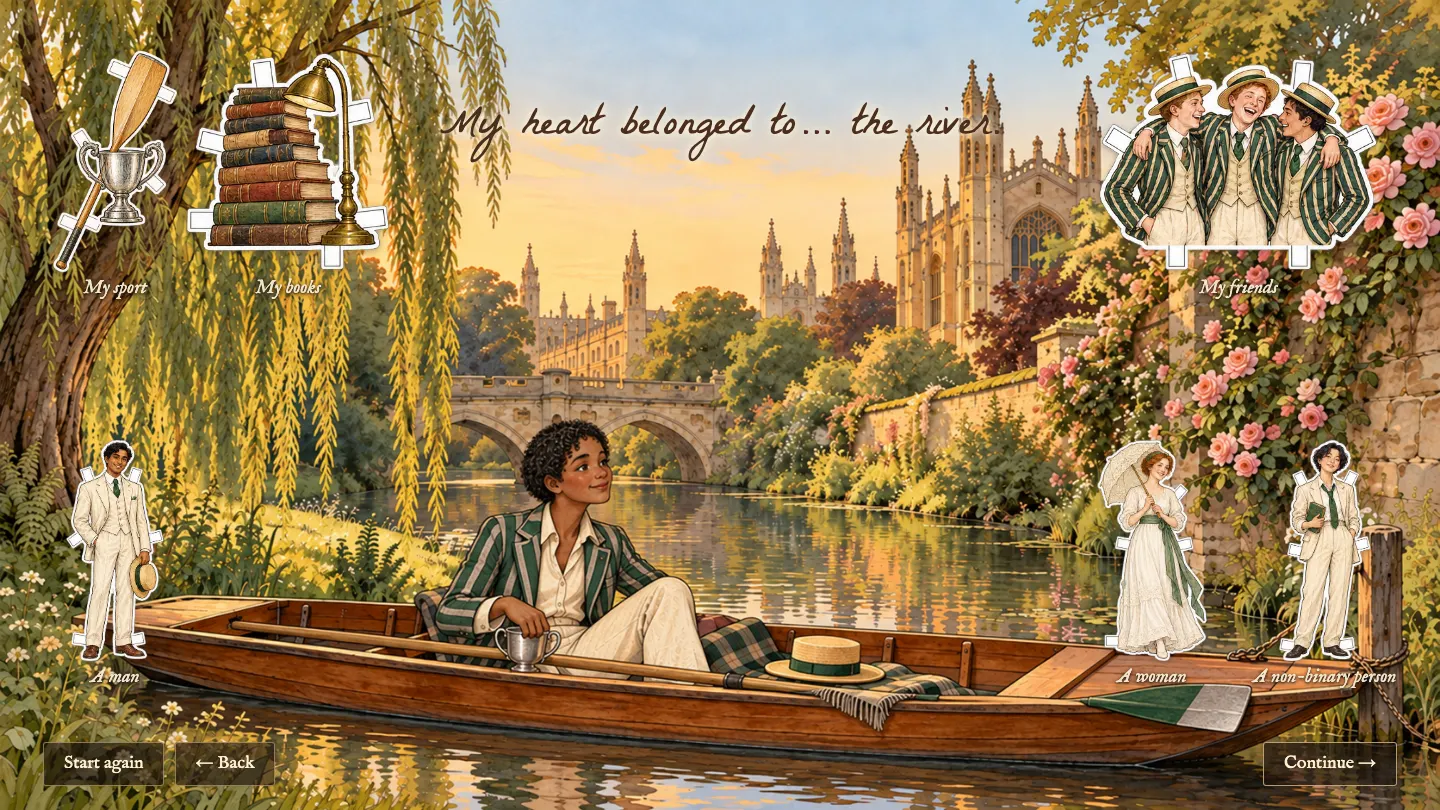
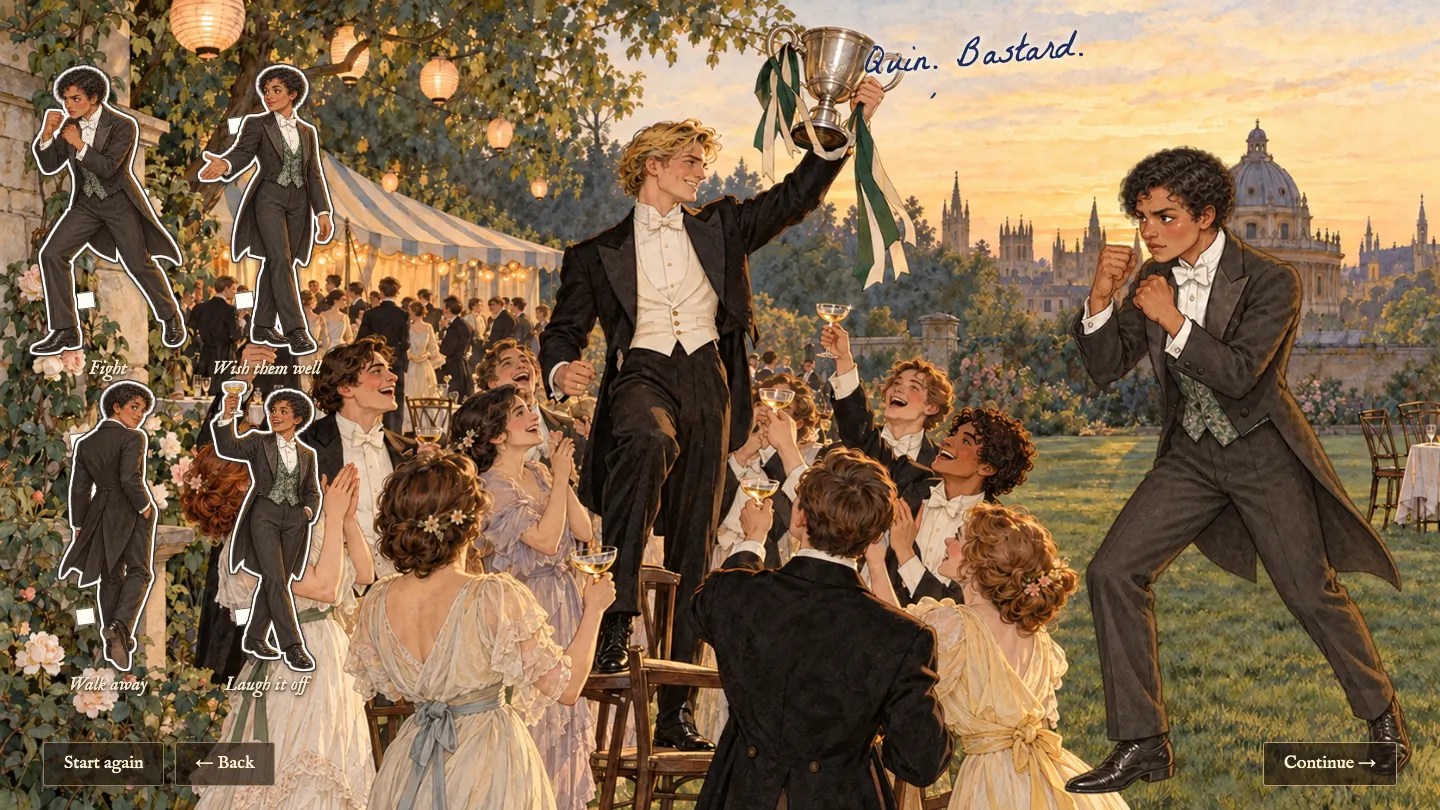
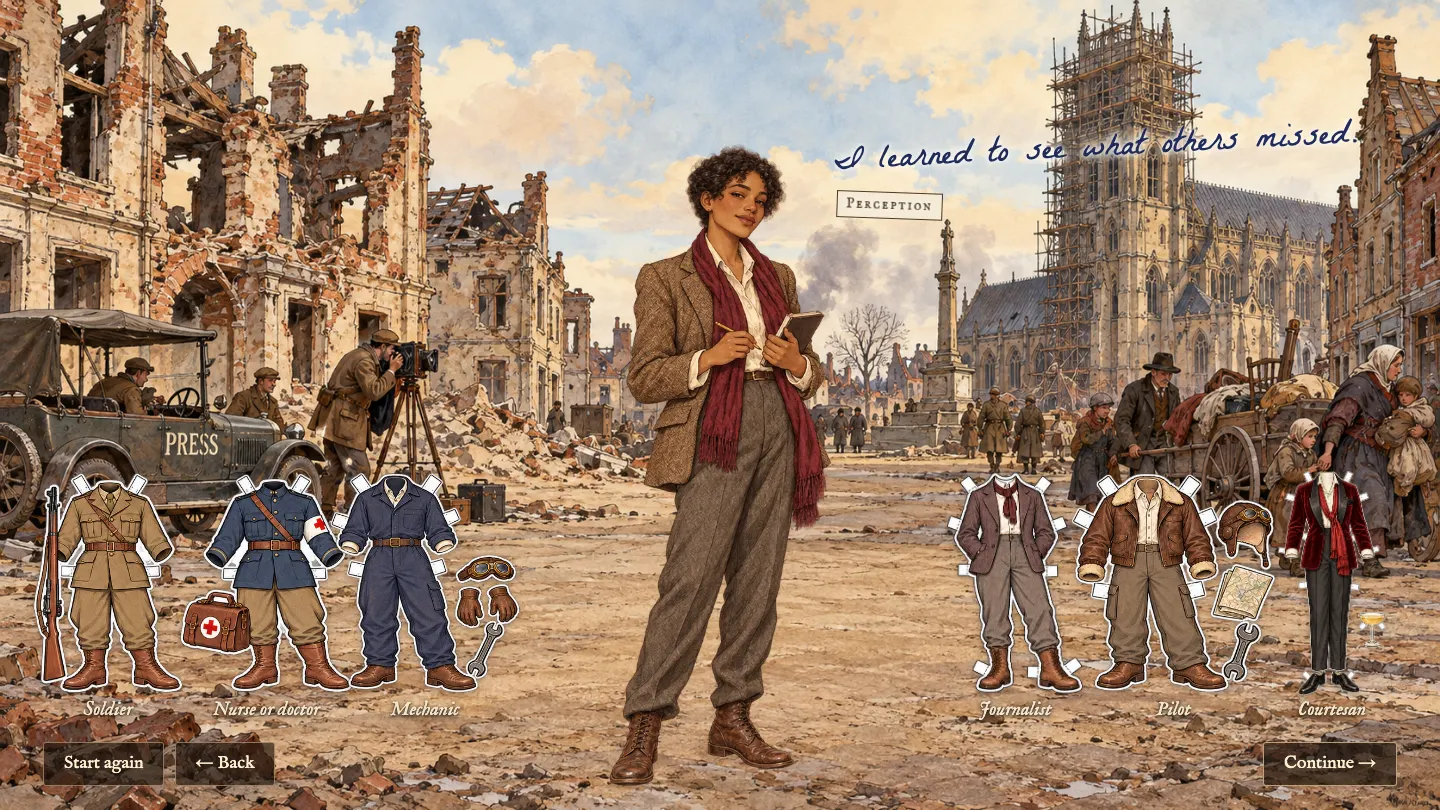
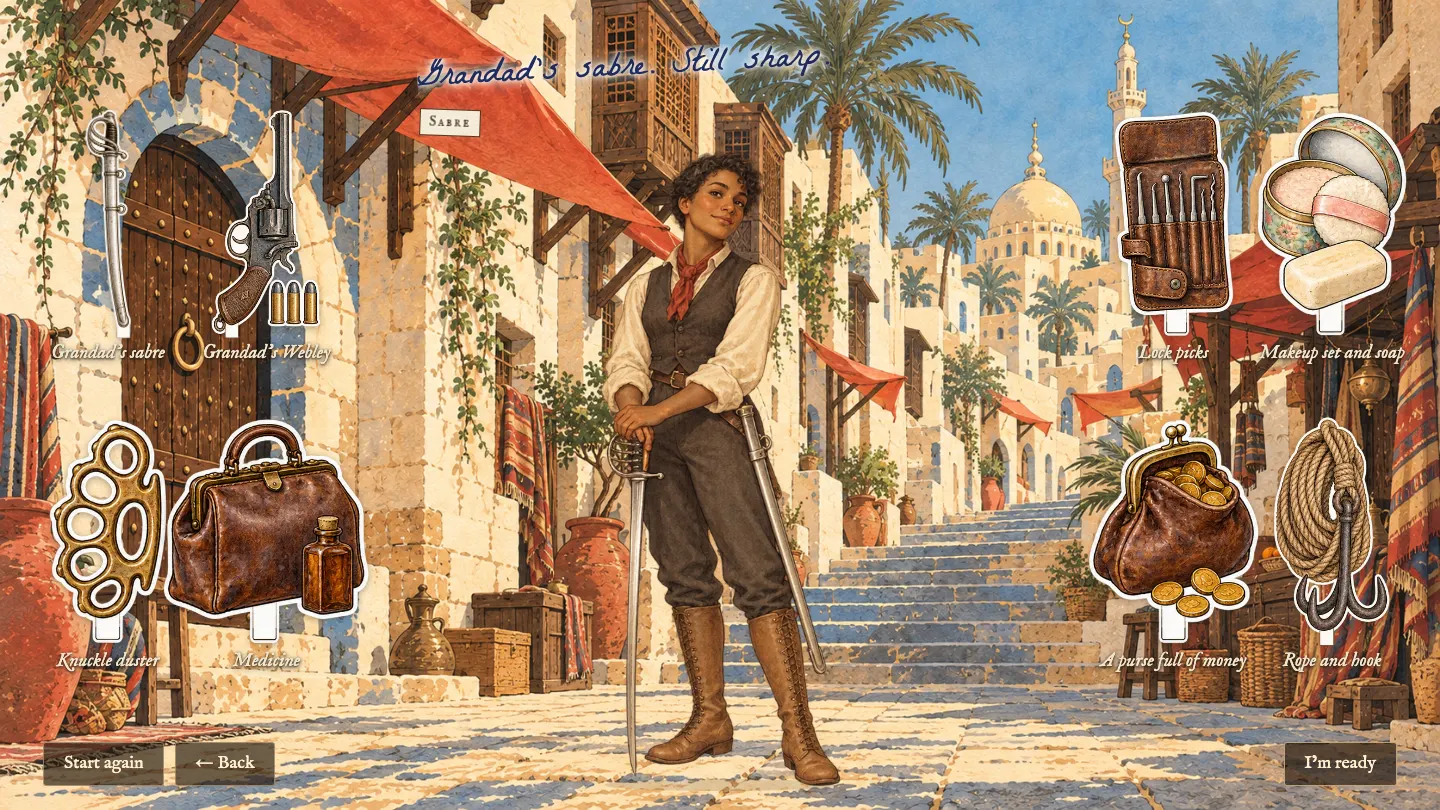
Panache does not open with a form. It opens with a silent film of the hero’s life, and the player chooses as it plays. Every choice gets an answer in the picture: a line in the hero’s own hand, and a printed tag when it gives the game a skill.

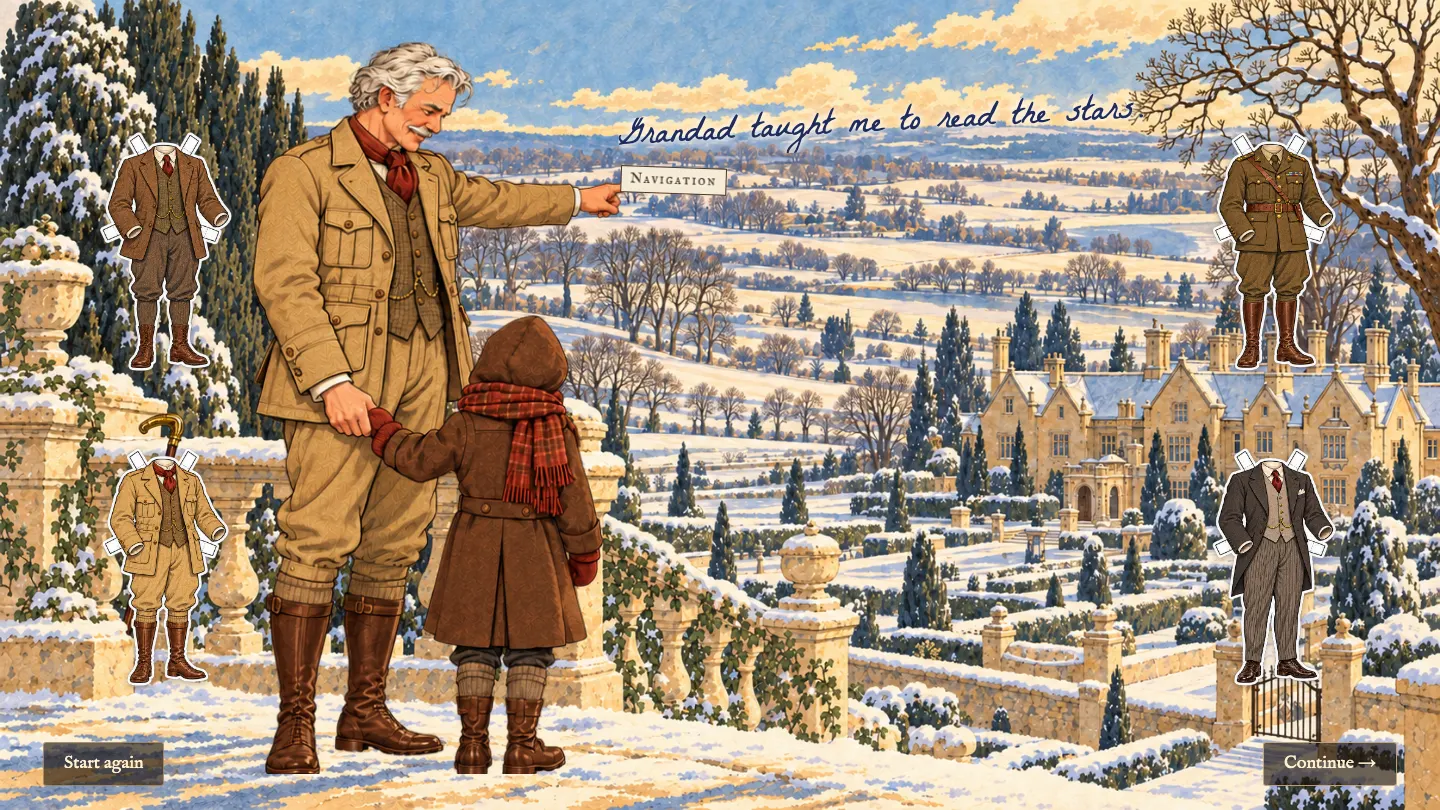
A snowy terrace above an English estate. Grandfather Mortimer points into the distance, holding the hand of a bundled child. Paper outfits stand at the sides.

Winter at Carrow Court

Childhood

You chooseGrandfather Mortimer’s outfit: hunter, old officer, explorer or lord. Each one teaches the child a skill.

For the story
One childhood skill.
For the director
Hunter: action at a distance. Officer: endurance and duty. Explorer: exploring. Lord: talk and charm.
1 of 8

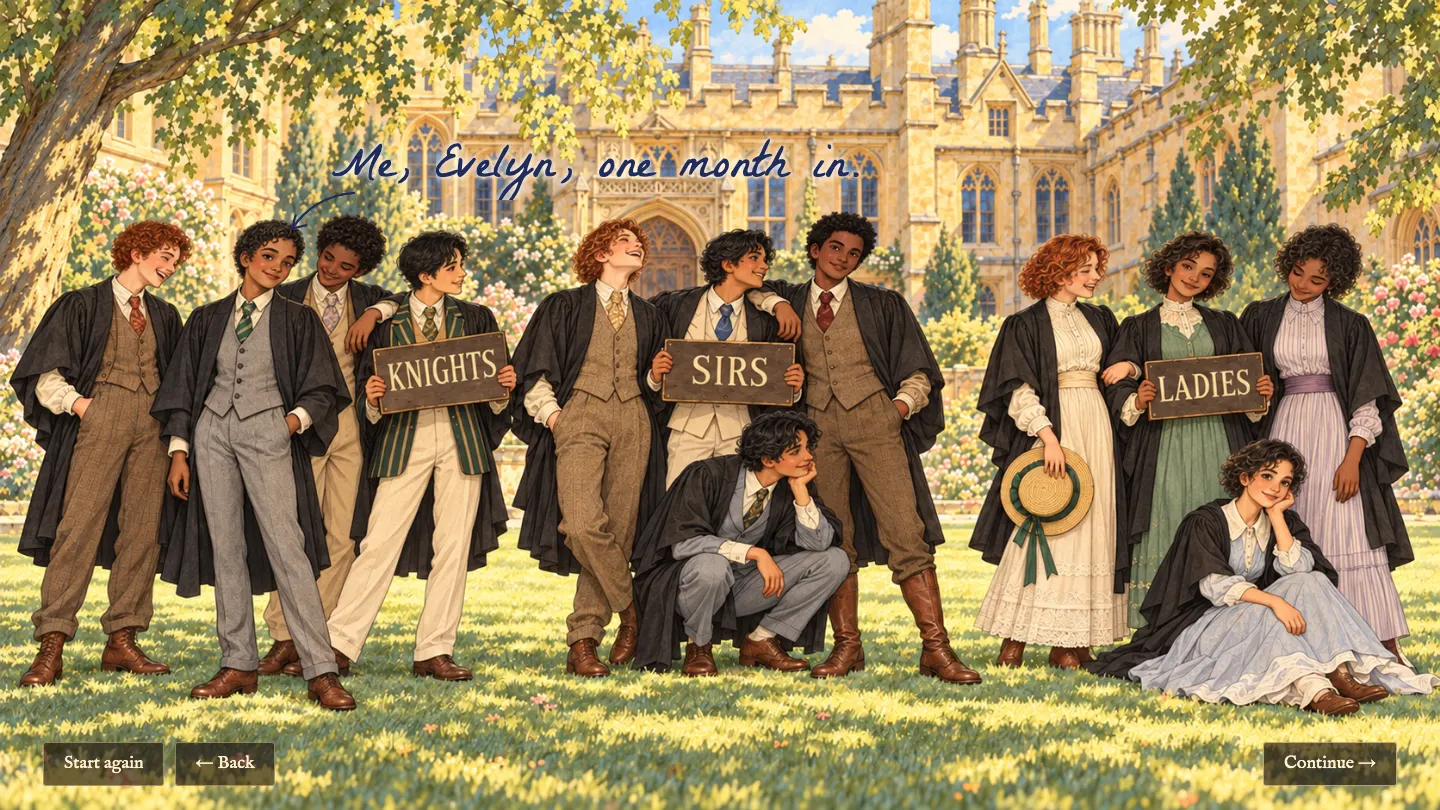
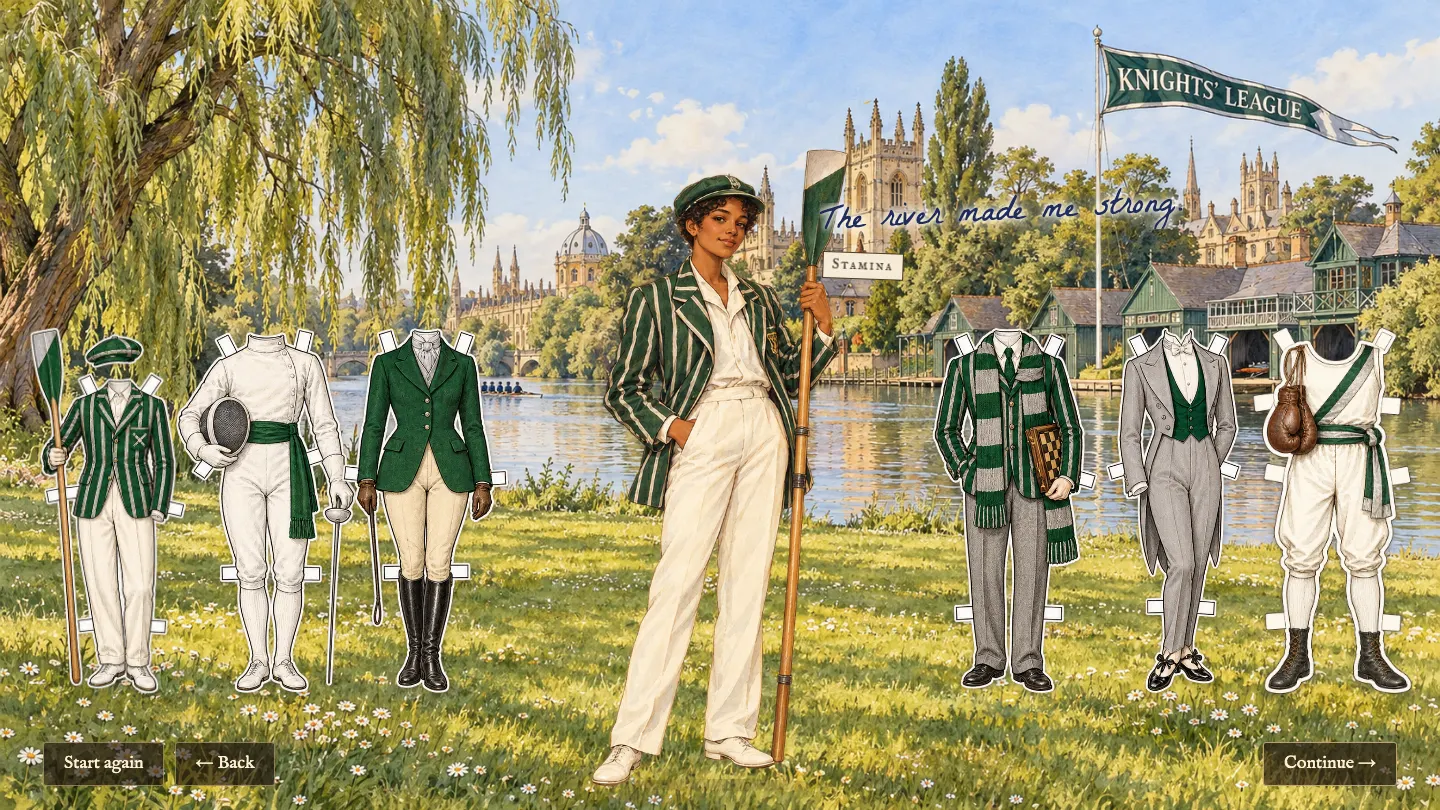
Screens from one playthrough as Knight Evelyn Carrow.

Every choice is a seed.

Each choice gives the story a fact: a skill, a talent, a tool, a rival. It also gives the AI director a hint about what this player came for: action, wits, romance, intrigue. The game treats each hint as a guess that later play confirms or corrects.

It is a preference survey that nobody has to fill in.

Watch the prologue

Panache: playing writes the book.

A solo gamebook from Unwritten, the publishing house I am building for the age of AI. Every choice becomes a spread, a picture on the left and the text on the right, across five acts. When you finish, the illustrated book is yours.

My role
Concept, game design and build
Under the hood
A multi-agent architecture that uses fast image, reasoning and decision models to give players interesting decisions, and emotionally resonant consequences for them.
Status
Early test with invited players at panache.unwritten.dk
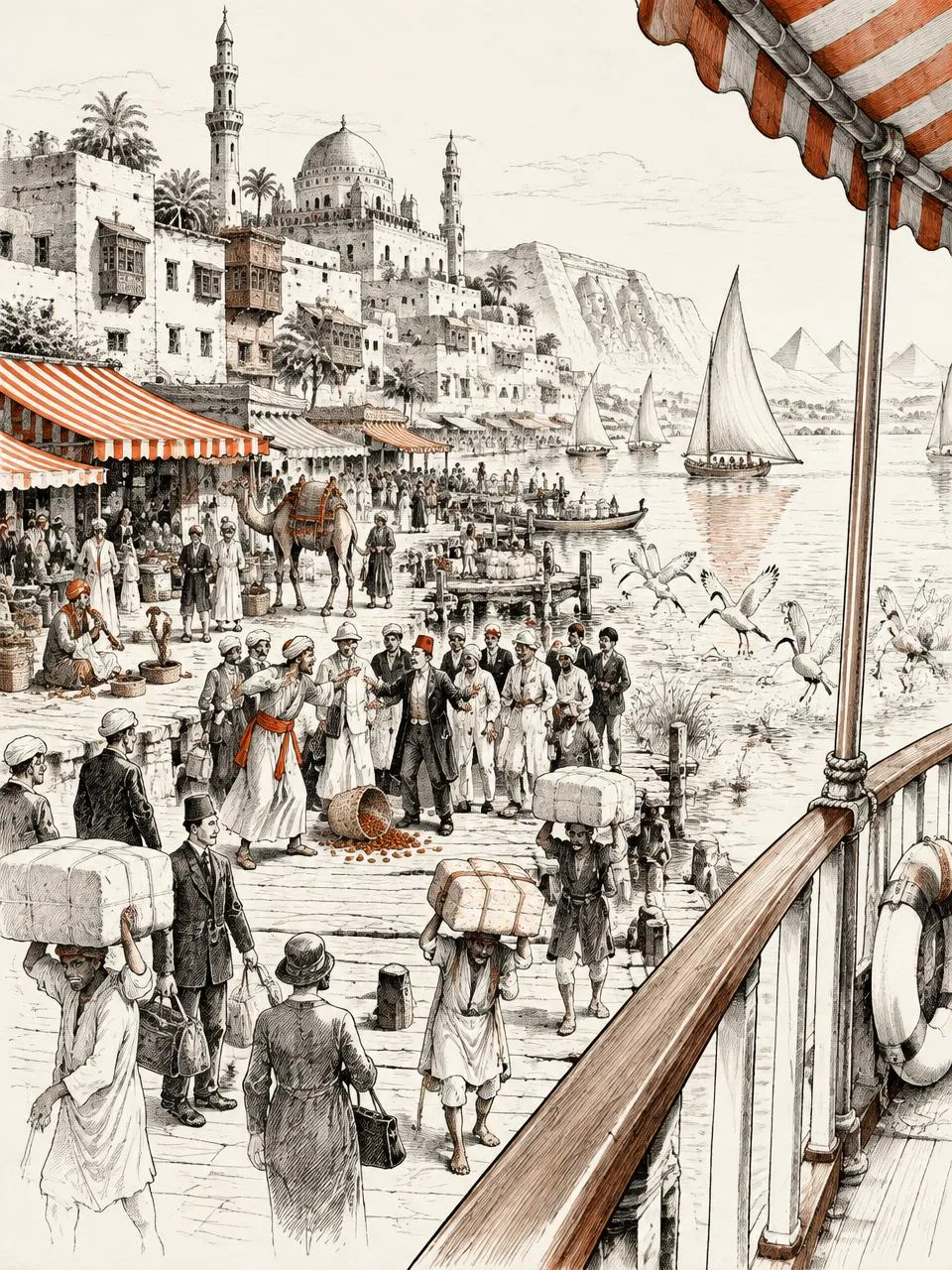
A crowded harbour on the Nile seen from the deck of a steamer: porters, camels, minarets and sailing boats
Nayara from the deck of the Hasra. The world seed of the Desert City, Egypt 1919.

Grow the story. Don’t manage it.

My master’s thesis argues that AI makes a new kind of interactive story possible, and that it needs new ways of steering.

The author does not write a plot. They prepare a world seed: a moment in history, a place, an object everyone wants, and people with plans of their own. The player’s choices and own words are the seeds of the story.

An AI director cultivates them, changing them just enough to surprise while they still fit. The player stops being a consumer and becomes a co-author, partly responsible for what comes out.

One engine, two worlds.

Each book is its own world, with its own art style, lettering and colours.

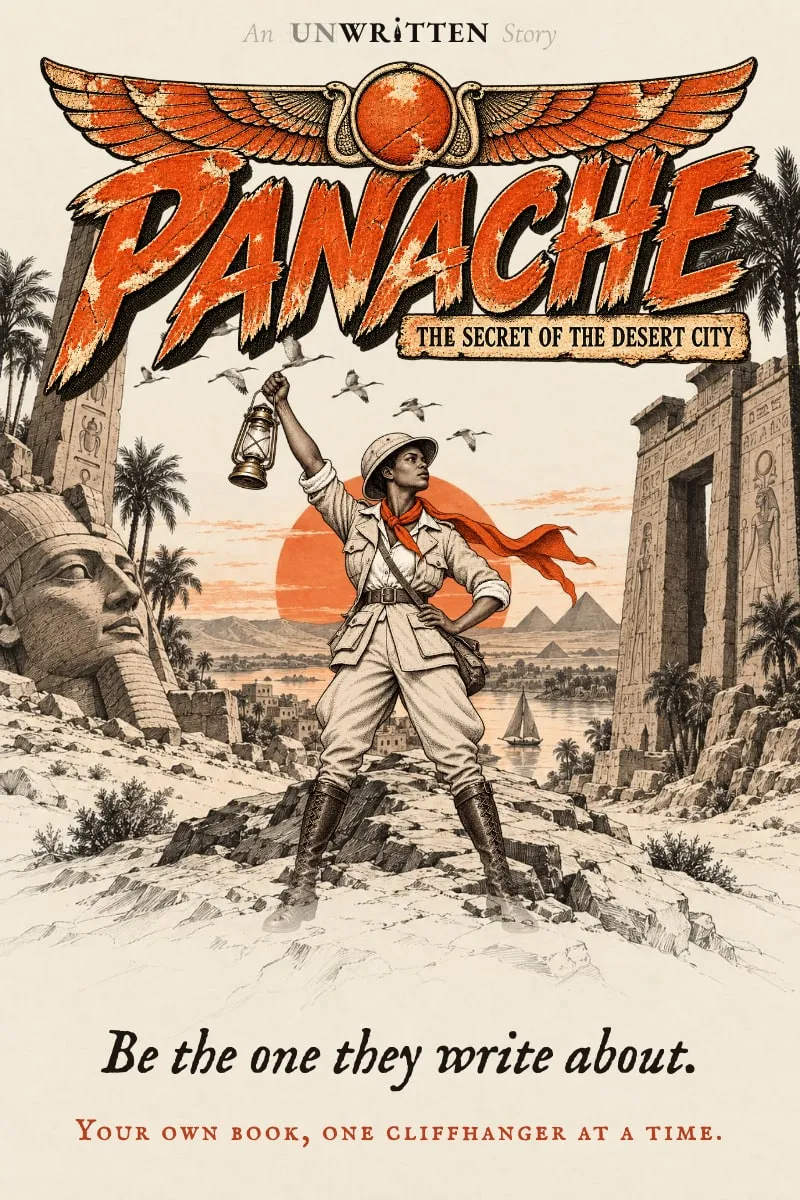
Poster: Panache, The Secret of the Desert City. An explorer raises a lantern among Egyptian ruins. “Be the one they write about.”
The Secret of the Desert City. Egypt, 1919. Playable now.
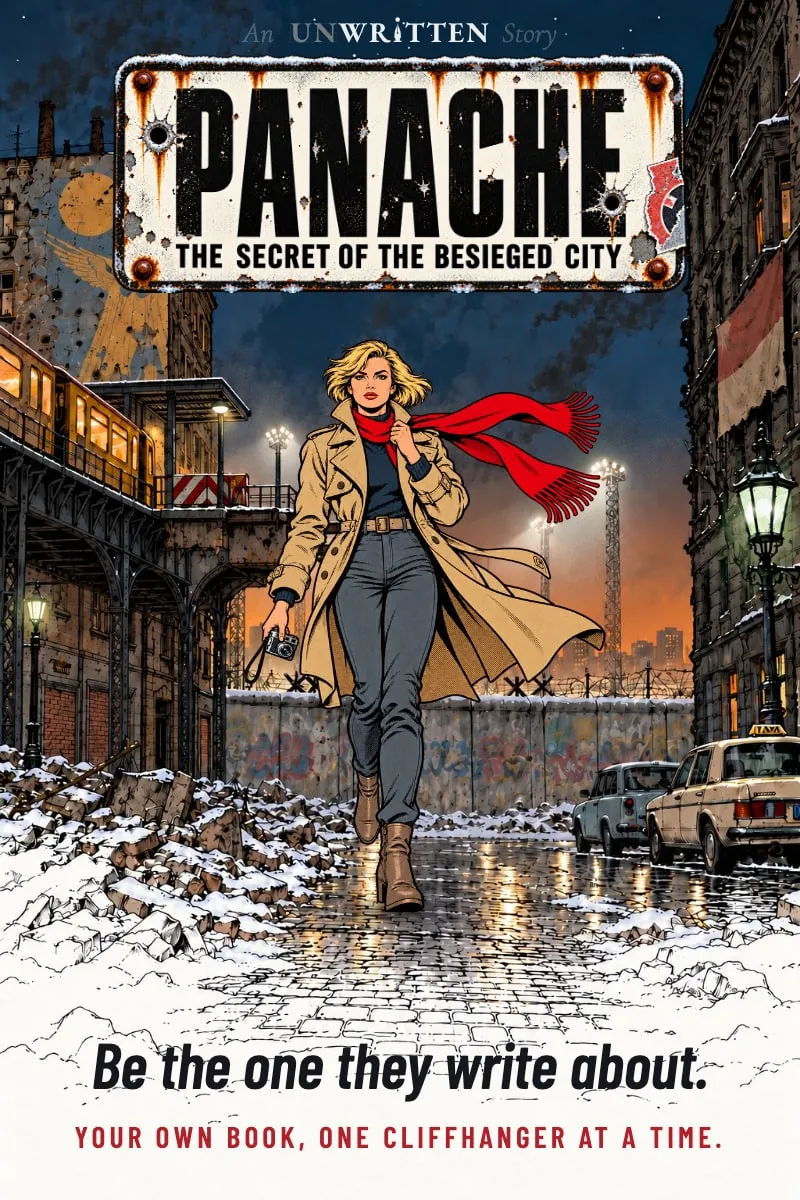
Poster: Panache, The Secret of the Besieged City. A woman in a trench coat walks through a snowy, divided city at night.
The Secret of the Besieged City. An alternative Berlin, 1984. Coming soon.

Built for the feed

The Ledger at Nayara is a second way in: a two-minute story for the phone. Pick a hero, name them, choose. There are ten endings, and six of them are fatal.

The last page offers to write the whole book, which leads to sign-up and the full game. The story frames are made for Instagram and Facebook, and they end by asking you to post your ending and pass it on.

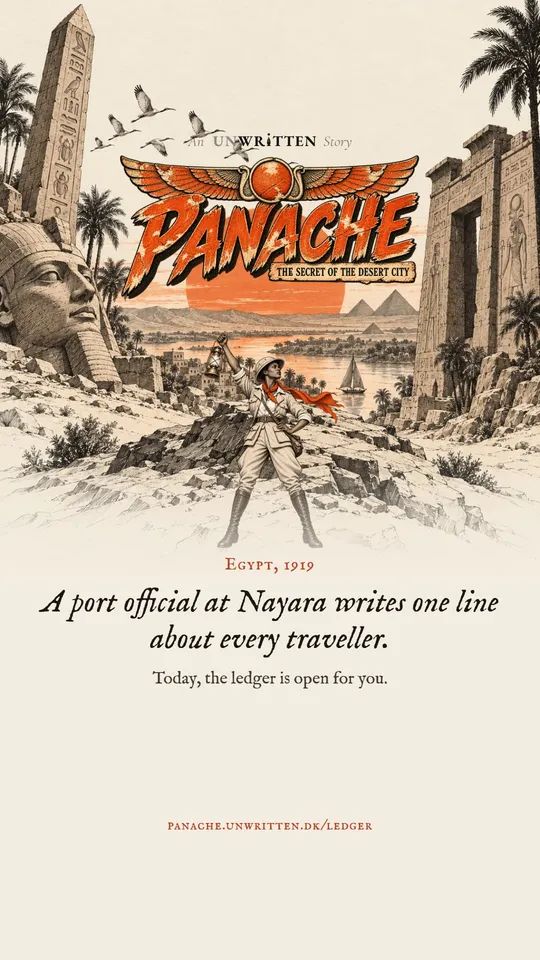
  1. Story frame: “A port official at Nayara writes one line about every traveller.”
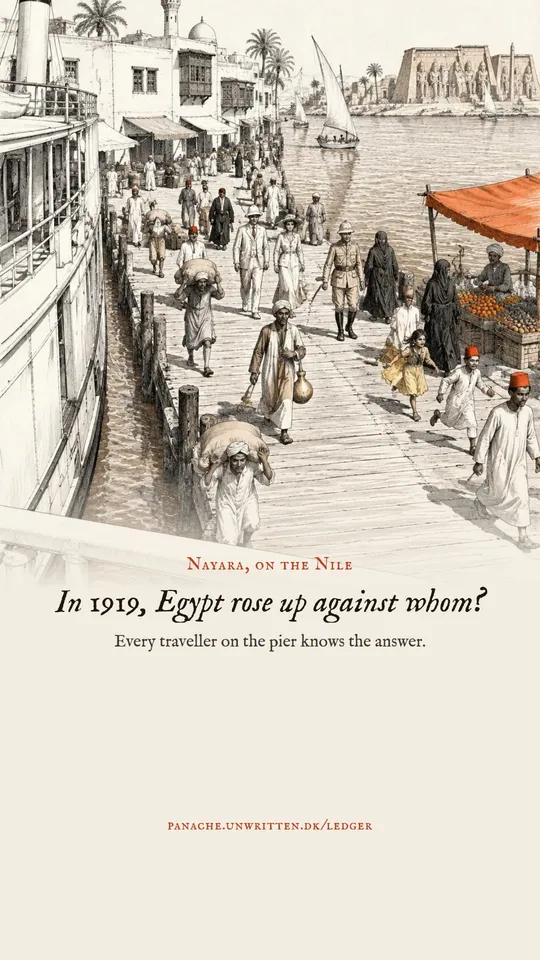
  2. Story frame: Nayara on the Nile. “In 1919, Egypt rose up against whom?”
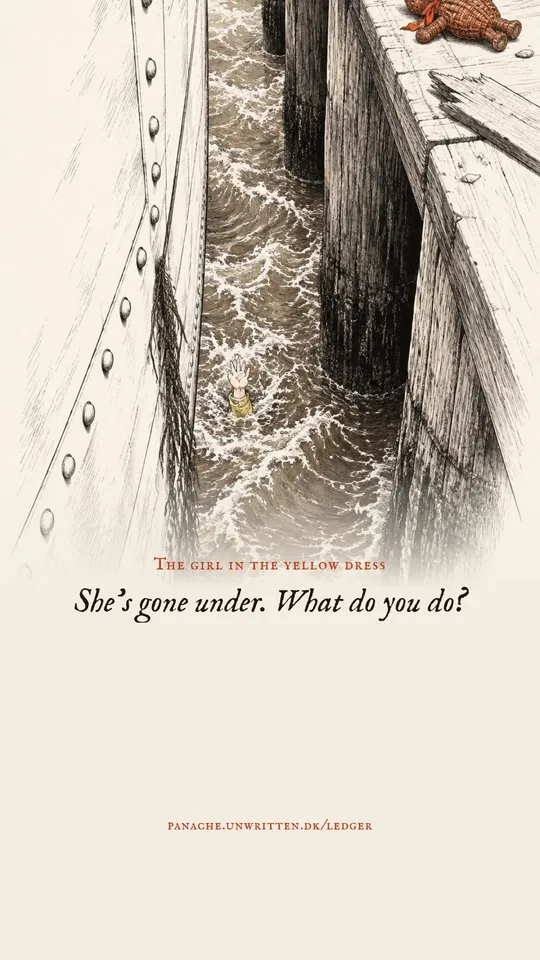
  3. Story frame: the girl in the yellow dress. “She’s gone under. What do you do?”
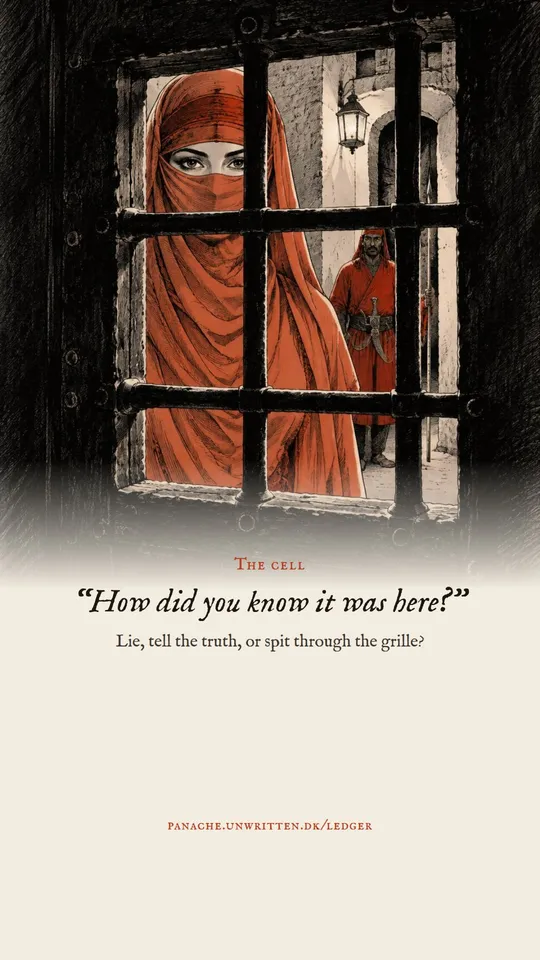
  4. Story frame: the cell. “How did you know it was here?”
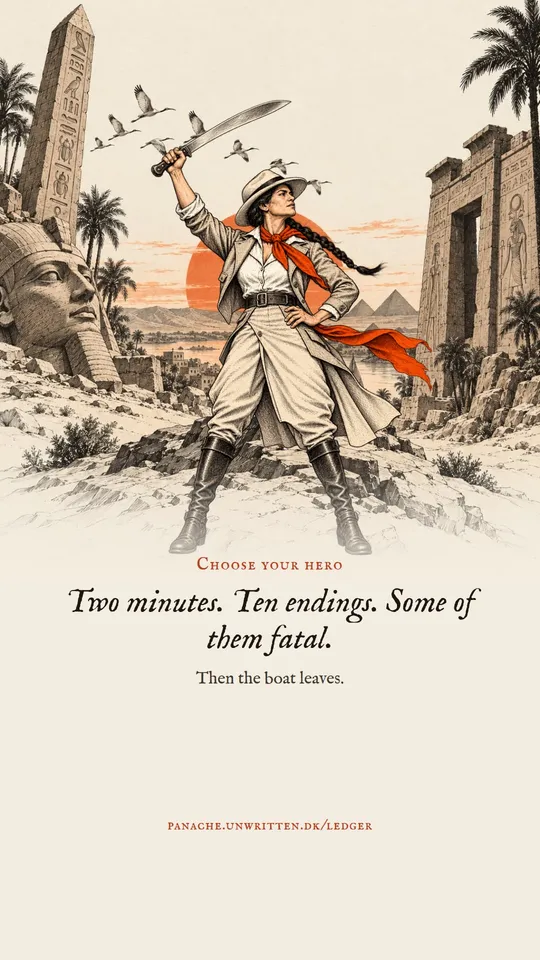
  5. Story frame: choose your hero. “Two minutes. Ten endings. Some of them fatal.”
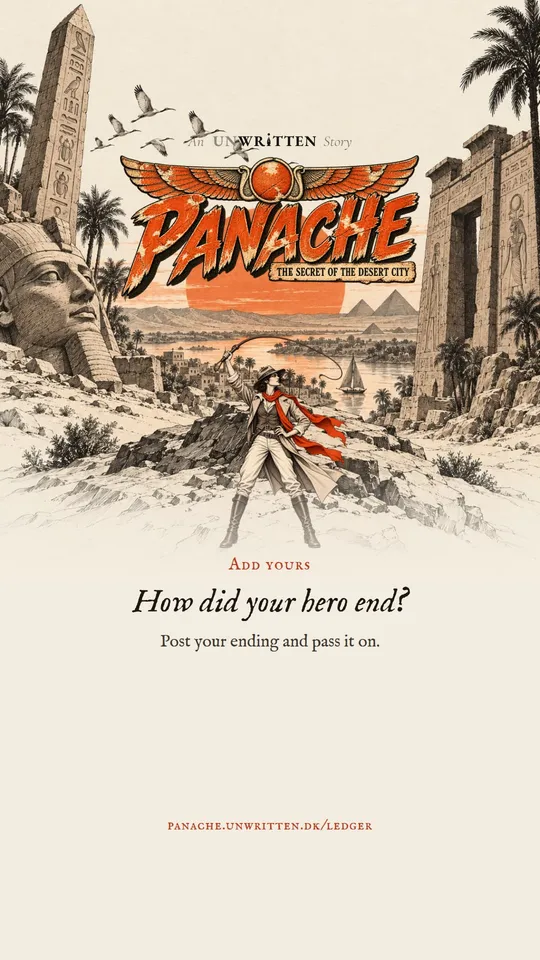
  6. Story frame: add yours. “How did your hero end? Post your ending and pass it on.”

The picture remembers.

There is no character sheet, no inventory, no dice. The hero has only what they visibly carry. Clothes, wounds and objects stay from picture to picture, and a wound on the left arm stays on the left. Allies replace equipment: you meet a thief instead of carrying a lock pick.

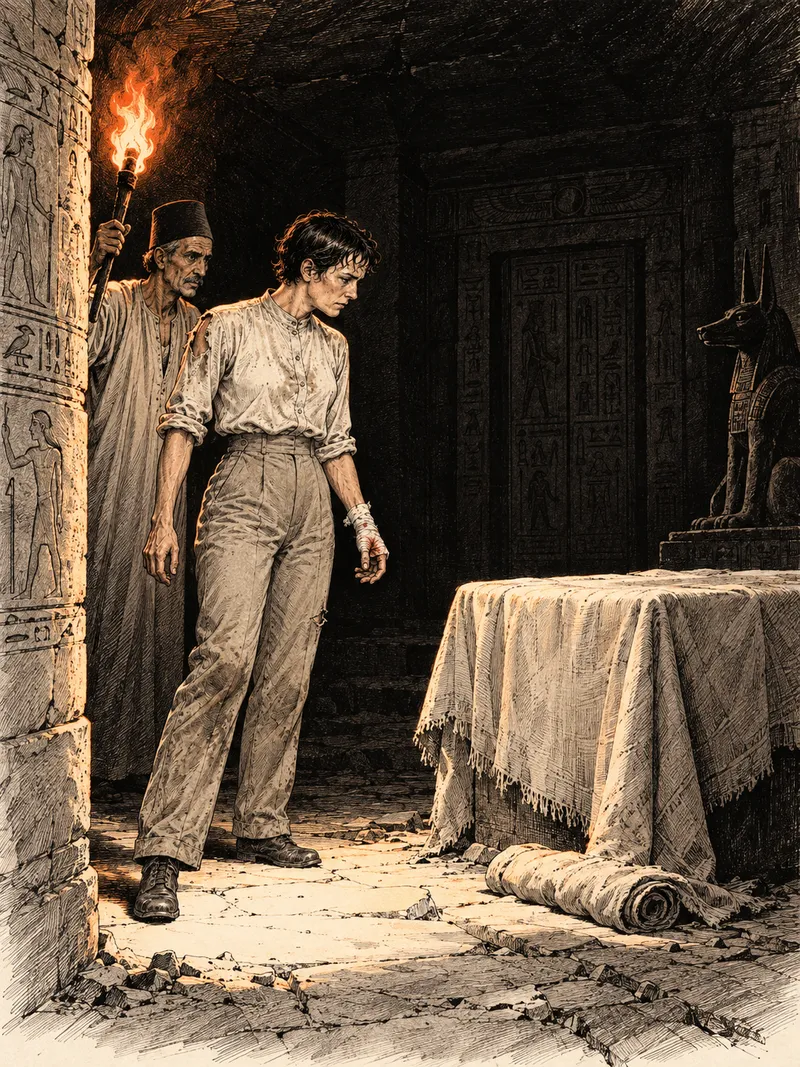
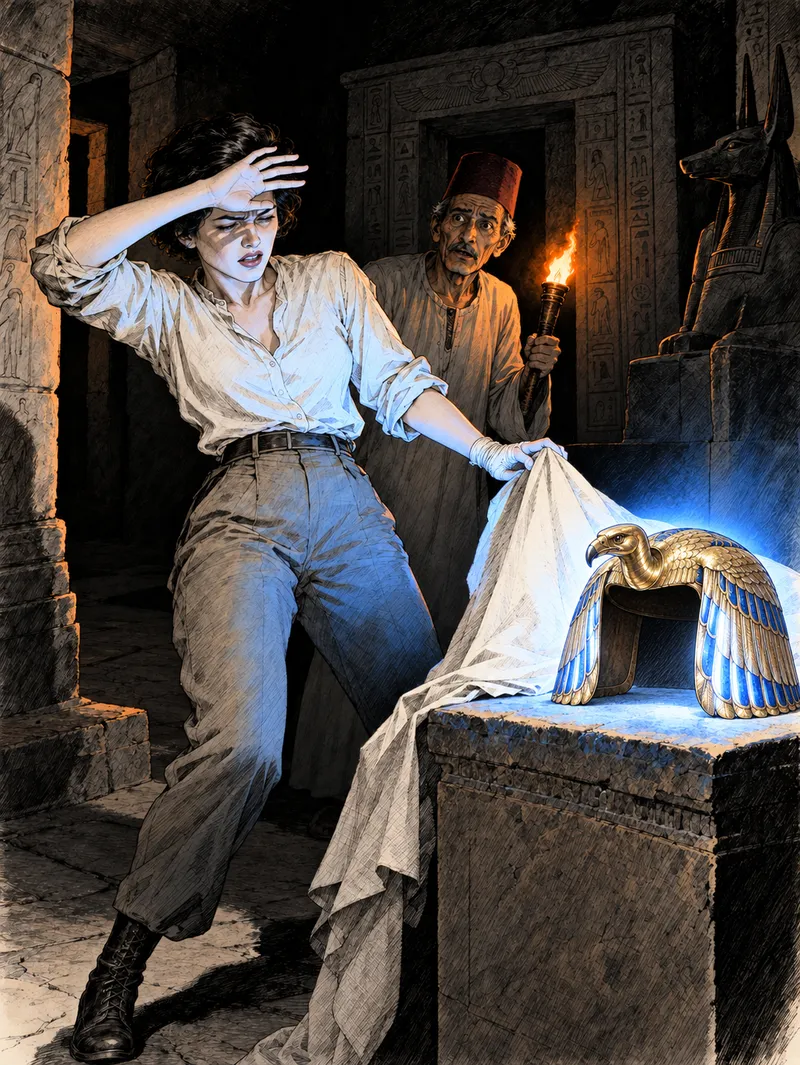
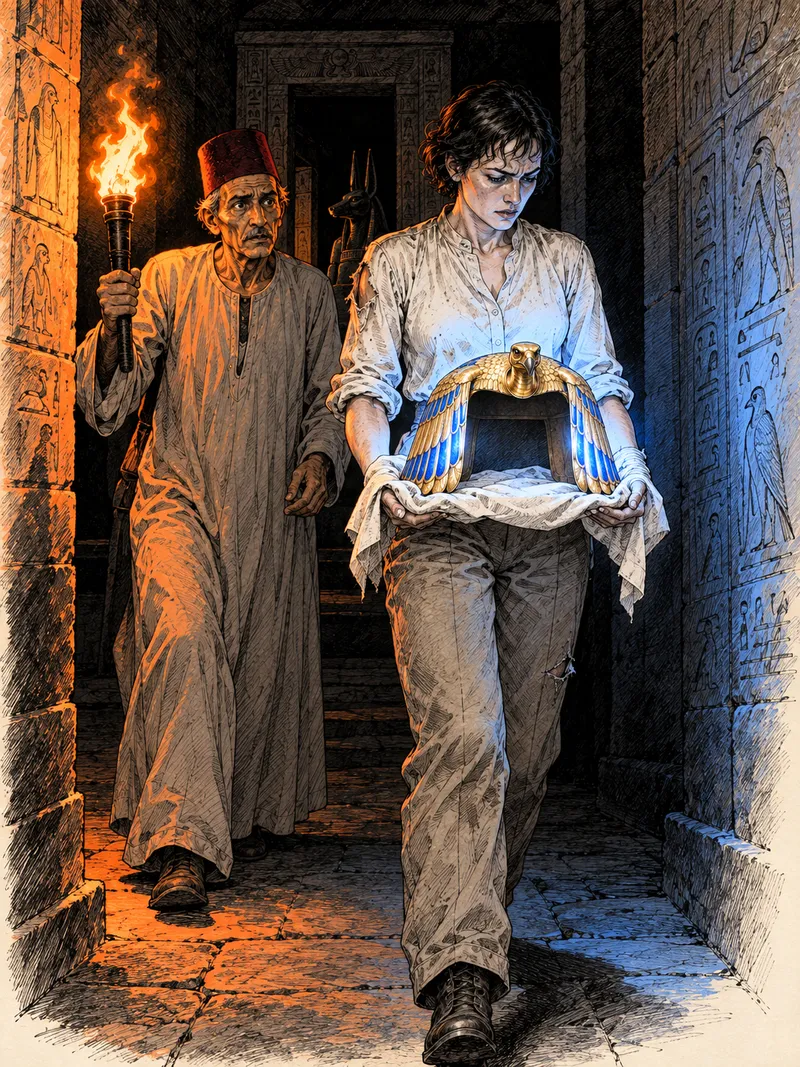
A torch-lit tomb chamber. The hero walks toward a covered altar while an old guide watches. The hero pulls the cloth from the altar and a golden crown blazes with blue light. The hero carries the crown in the cloth down a corridor, the guide following with a torch.
A continuity study: one discovery in three pictures, the same hero, the same clothes, the same guide.

What the player never sees.

Behind every page, an AI director keeps a scene sheet: how long the scene lasts, where everyone is, how fast trouble is coming and what has to happen. So the player, the narrator and the illustrator all picture the same scene. The player only gets the words.

The page

Dust sifts down from the ceiling. Across the chamber the Baron is shouting at his men, and two more moves bring him to the trench. You are still four strides from the cracked archway, a hard sprint away. Above you, the roof gives a long, slow groan.

What do you do?

The director’s sheet

Scene
The collapsing tomb, Act IV
Time
1 unit = one quick action
Threat
The Baron, visible. Reaches the trench in 2 units
Clock
The roof. Falls in 3 units
Way out
The archway, 0 of 4. Bold covers 2 a unit, steady 1
Must happen
Confront the Baron, then get out

Hover or tab through the marked lines to see where each one comes from. The page is written for this portfolio from lines in real playtest pages; the sheet is simplified from the game’s format.

Rules I gave the AI director

  • Hide the machinery.

    The first versions showed gauges. A tester said it felt like following a game underneath that he did not understand. Now the page says it all in words: who is coming, where they are, how soon they arrive.

  • What the player has seen is a promise.

    A threat seen a mile off cannot arrive in one sentence. Hidden things may surprise. Distances the hero could plainly see may not.

  • Say “yes, and”.

    Like a game master at the table, the assistant director grants what the scene allows and adds a cost rather than a flat no.

  • Ask once.

    When an action rests on a fact the player seems to have missed, the book asks: “The sentry sits within arm’s reach, not across the room. Still go for the revolver?” Asking costs no time.

  • Daring wins the day.

    A bold action covers twice the ground in the same time. Hiding and waiting never hold a threat back. Careful players lose more often than bold ones.

  • Nothing the player gives is dropped.

    Every choice and every word the player writes is a seed. Threads rest, and come back later in the book.

Testing an AI with AI.

You cannot test a story engine by playing it yourself. When a tester lost nine scenes in a row and replayed the same tomb four times, I built a test bench. Five simulated players play the same scenes through the real game code and see only what a real player sees.

A run of thirty plays costs about $1.50 and takes ten to fifteen minutes. Six rounds of fixes followed. The first made every scene unloseable. A later one meant sensible players never lost. Only then could I set the rule I actually wanted: daring beats caution.

The five players

careful
always takes the most careful choice
bold
always takes the boldest choice
ally
uses companions and the place
writer
writes bold actions in a real tester’s style
confused
misreads the page and plays badly on purpose
  • An AI judge is an opinion, not a measurement.

    A language model judged every play from the player’s view. In the first runs it called scenes fair that the numbers showed could not be lost. Now the judge comments and code counts.

  • Models miscount their own story.

    The narrator sometimes said “two more moves” twice in a row, and sometimes told a loss as an escape. So code hands the narrator the distances and countdowns, and a check rewrites a page that tells a loss as an escape.

  • Test on the model you ship.

    A free local model was tempting for the bench, but it behaves differently, and tuning on it tunes the wrong game. The simulated players play on the production model, the same one real players meet.

Where this comes from.

Before AI, I did this with people: Nordic live-action games with no script and no game master, board games and party games. The problem was always the same. Build the world, then let go, and make people want to act.

LARP / DENMARK · 1997–2002

Nemefrego Saga

Four hundred players. No script. No game master.

What it feels like to play

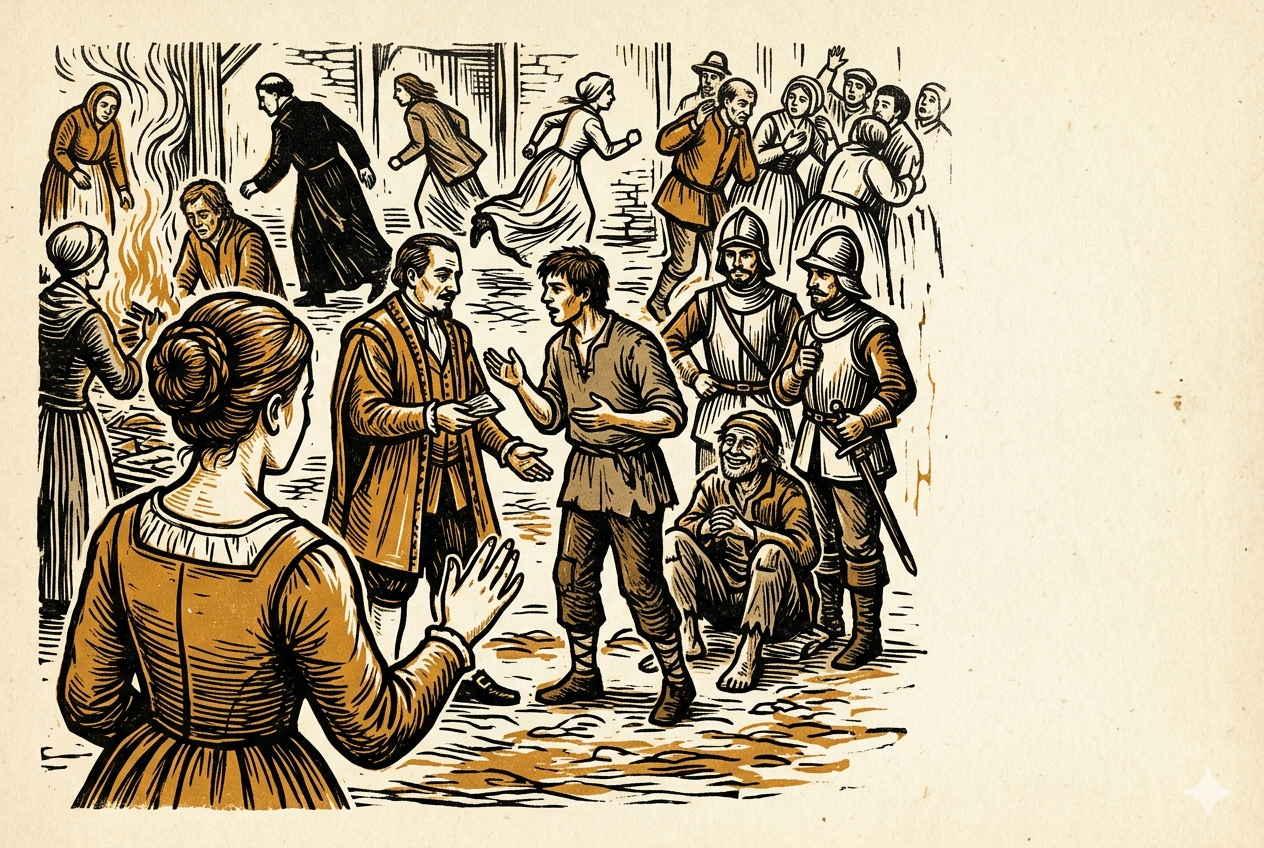
You are Meriam. A merchant’s oldest daughter, almost too old for marriage. In desperation, your father has promised you to a depraved old nobleman, empty purse, a cruel reputation, and worse behind closed doors.

Your closest friend urges you to elope with the miller’s son. You do like him. He cannot support you.

The priests say obey your father. The old wise woman says seek counsel from the creatures of the night forest. The beggars taunt you. The soldiers by the gate suggest an entirely different life with their eyes and their whispered remarks.

Every character you meet, your father, the nobleman, the miller’s son, is a real person, trying to solve their own problem.

In the end you decide to talk to the miller’s son. So you walk to his village and find him. You open your mouth and say the words Meriam would say.

He woos you with a song he makes up on the spot. The lyrics are about you, improvised, imperfect, completely sincere. You decide it works on Meriam. But you push back: he has no money. No future. He’s the miller’s third son.

He tells you his plan. It’s daring. You’d have to help him.

It could work. It sounds like an adventure.


The design challenge

Four hundred players, no game master, no script. You have built the world, the villages, the backstories, the factions, the secrets. But when they walk through the gates, the story belongs to them. The designer’s job is to make sure they can tell a great one.


What it opened up

Players took the story somewhere we hadn’t imagined, and it was better than anything we had prepared. That was the first surprise.

The second came when we played other designers’ larps, games with predetermined narratives, careful structures, beautiful stories. We were thoroughly entertained. As audience members. That felt wrong.

The players should be the authors. That didn’t feel like a solution. It felt like the beginning of a much larger question.

Nemefrego was a series of games that explored answers that fit this new medium.

BOARD GAME / COPENHAGEN · 2009

Casus Belli

What if the most dangerous enemy was sitting at your own table?

What it felt like to play

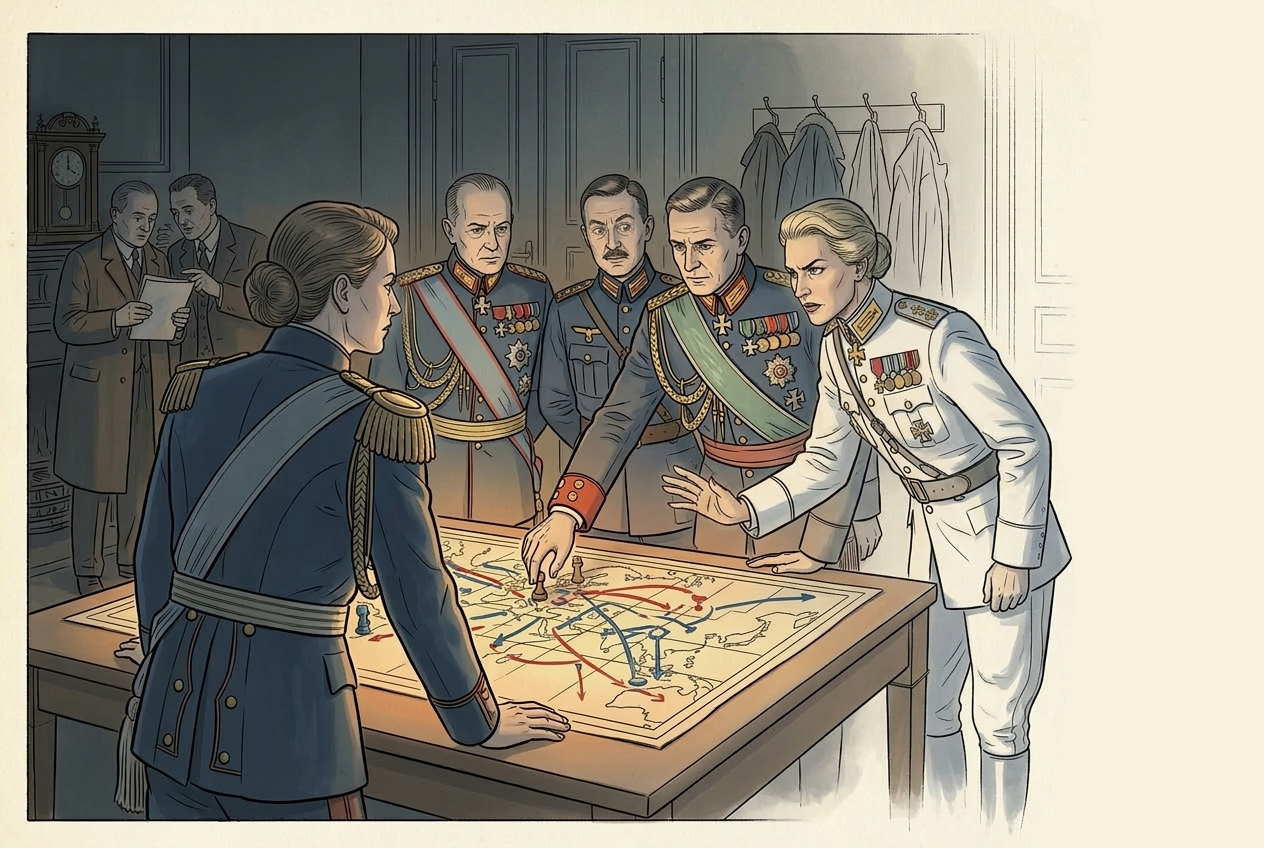
It is December 1914. Mother Russia has a plan.

England must fall. But Germany stands between you and glory, and so you do what empires have always done when the sword is not enough. You send a man with money and a smile.

Your diplomat crosses the room. Conversations are had. Hands are shaken. He returns with good news.

You mobilise. The Russian war machine moves west.

What happens next will be studied, argued over, and laughed about for the rest of the evening. England holds. Germany, it turns out, has not switched sides. Germany has simply taken the money. And somewhere in the chaos, your own diplomat has crossed the floor and accepted a medal from the German delegation.

He is standing there right now. Decorated. Beaming. Entirely at peace with his decisions.

You have been betrayed by your own foreign ministry, robbed by your allies, and crushed between two great powers.

You curse your former diplomat under your breath and focus. A new round has begun. You have twenty minutes to save your army. And now you also need a new diplomat.


The design challenge

Each country in Casus Belli was run by a team. The general commanded troops. The ambassador made alliances. The state councillor managed finances. The leader handed out medals.

Each role had real autonomy. And each player had their own definition of winning.

The question was whether a team with divided loyalties could function as a country at all, and what happened to strategy when the enemy could simply buy one of your colleagues.


What it opened up

Medals turned out to be the most powerful currency in the game. Not bribing a country, but bribing a person. One medal, one quiet conversation, and the most brilliant strategy in the room collapsed before it moved.

The game rewarded neither the best strategist nor the best diplomat. It rewarded whoever best understood that everyone at the table, including their own team, had a price.

We were surprised how much fun it was. Sometimes a game doesn’t need to change the world. It just needs to make you laugh at whoever just stabbed you in the back.

LARP / COPENHAGEN · 2008

Starstruck

A party game about fame.

What it felt like to play

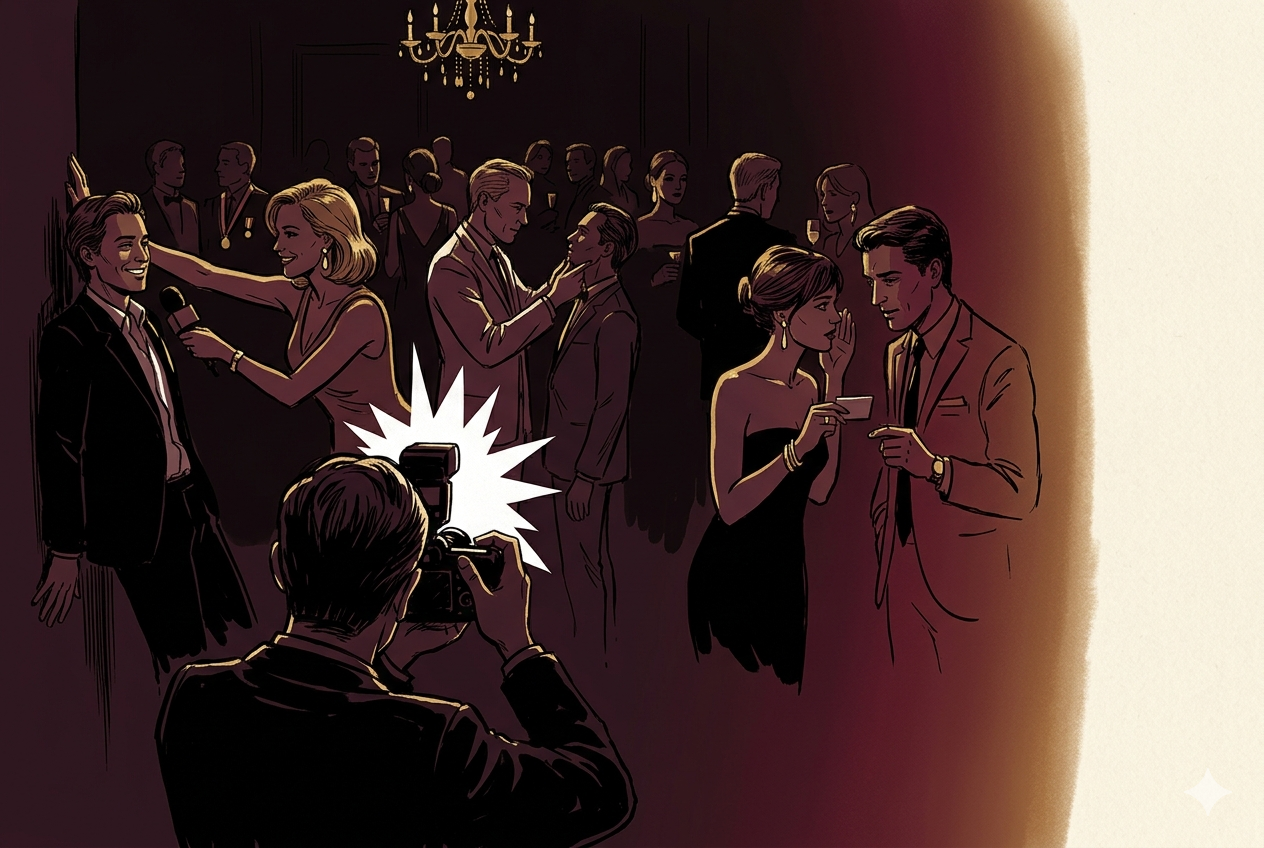
You are dressed for cameras that may or may not be watching.

The TV host is already circling. She pulls you aside, asks gently about your recently deceased dog. Off camera, sympathetic. Then she points the microphone at your face, counts down, five, four, and asks on live television how you feel about the rumours that your closest ally is voting you out.

Across the room the plastic surgeon is looking at you the way Picasso looked at a blank canvas. He has a card in his pocket that says “1600 millilitre implants” and he needs three volunteers before the night is over. He also needs a wife. For professional reasons.

You are collecting headlines the way other people collect debts. Someone in this room already knows your worst secret. You have no idea who.

Nobody came here to have fun. They came to be seen.


The design challenge

In 2008 fame felt like a contagion. Reality television had convinced an entire generation that celebrity was both achievable and meaningful. The characters in Starstruck were that generation, overdressed, over-ambitious, and completely hollow underneath.

The design challenge was to package a larp as a product. No designer in the room. Any number of players. Pick up the box and play.


What it opened up

Headlines as tradeable currency turned out to be the right mechanic. Fame made tangible, transferable and losable in a single conversation. Players understood it instantly and immediately started gaming it in ways we hadn’t planned.

The corruption theme needed no explanation. It was already in the characters, the camera, the marriage market and the secrets. Players arrived playing archetypes and left having enacted something uncomfortably close to the real thing.

Scaling larp to a product turned out to be harder than the game deserved. Too much depends on someone being in the room. Without a guide, the edges fray. Starstruck worked beautifully when we ran it. Getting it to run without us was a problem we never solved.

That problem is still interesting. We are still working on it.

LARP / DENMARK · 2001

Efter Vinter Kommer Vår

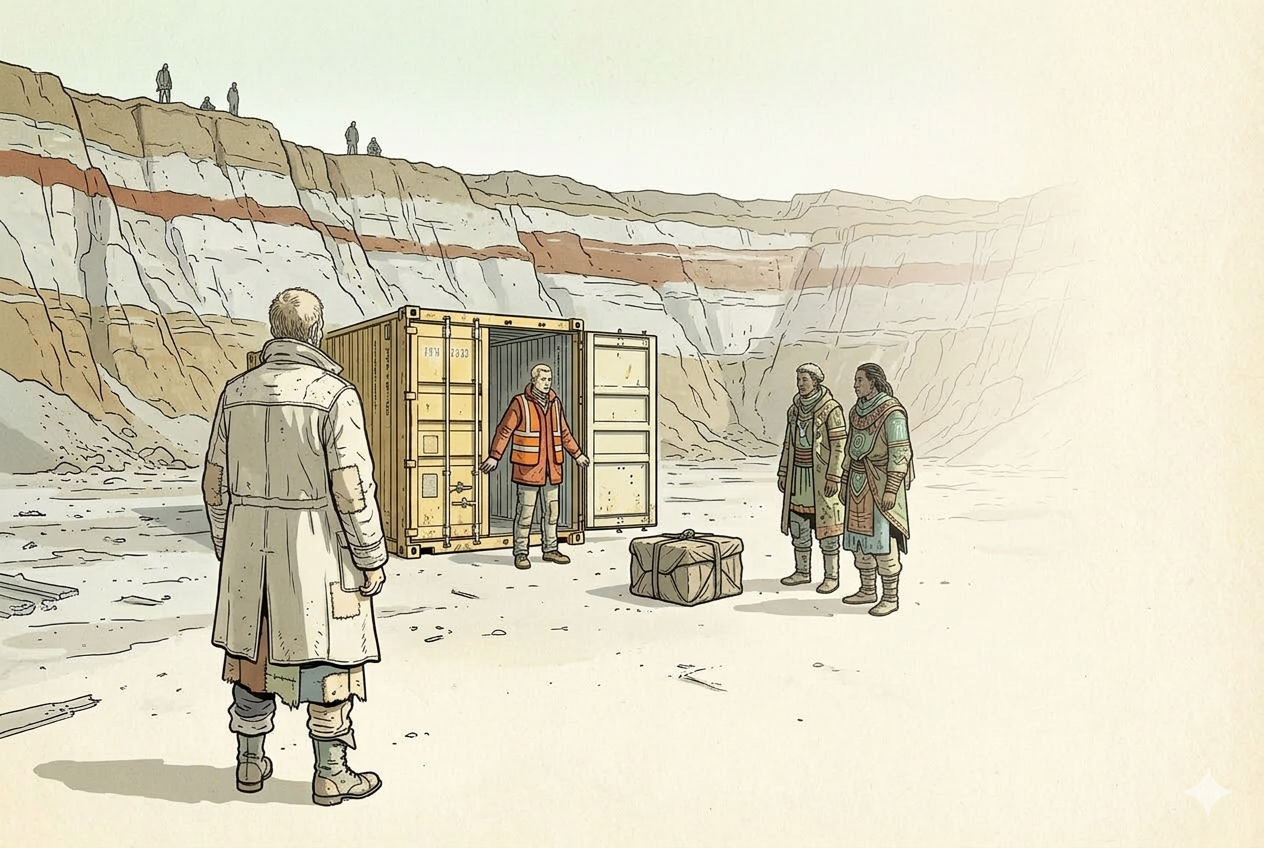
A post-apocalyptic game in a gravel pit.

What it felt like to play

Six months before the game, you received an invitation and a constraint: build a tribe. Values, clothing, gear, culture.

On the day, you were picked up at the train station, checked in, changed into costume and searched for food. Then put back on the bus.

The bus dropped you in terrain with a map. No other instructions.

When you arrived you saw containers. A lamp post rising from the sand. Other people digging. That’s when it hit you, there were things buried out there. If you wanted them, you had to find them. You had to actually dig.

The containers were real. You could occupy one. The concrete blocks scattered across the site were real. Some were half-buried in the sand. When you discovered you could break them open and find food inside, something shifted.

The world didn’t care what you did. It was just there. So you had to do something.

You were playing a post-apocalyptic scavenger. So you scavenged. Not because the rules said so. Because you were hungry.

A lot of the time, nothing happened. Boredom was part of it, though nobody had told you that. When something did happen, a ritual, a trade, a confrontation, everyone came to watch. Any act of culture became magnetic.

Twenty-five years later you still talk about what the others invented. The creativity of strangers who had spent months becoming someone else, finally finding out who that was.


The design challenge

Strip a game to its bones. No game master. No prewritten story. Absolute scenography, everything in the world is exactly what it looks like. Players who don’t know each other, assigned to build tribes from scratch in the months before arrival. Minimal rules.

What’s left when you remove every abstraction? Can players fill that space with something real?


What it opened up

The resource scarcity we had designed as the engine of conflict turned out to be beside the point. Players weren’t driven by hunger. They were driven by each other.

The real content of the game was cultural exchange. Tribes with distinct identities, rituals, histories, invented from nothing, treated as ancient, meeting strangers in a quarry and finding out what they had in common.

We had built the stage expecting one kind of drama. The players wrote another.

The lesson was uncomfortable. The most empowered players don’t need conflict to generate story. They need a world worth inhabiting and other people worth meeting. Everything else is just scaffolding.
LARP / DENMARK · 2012

In Fair Verona

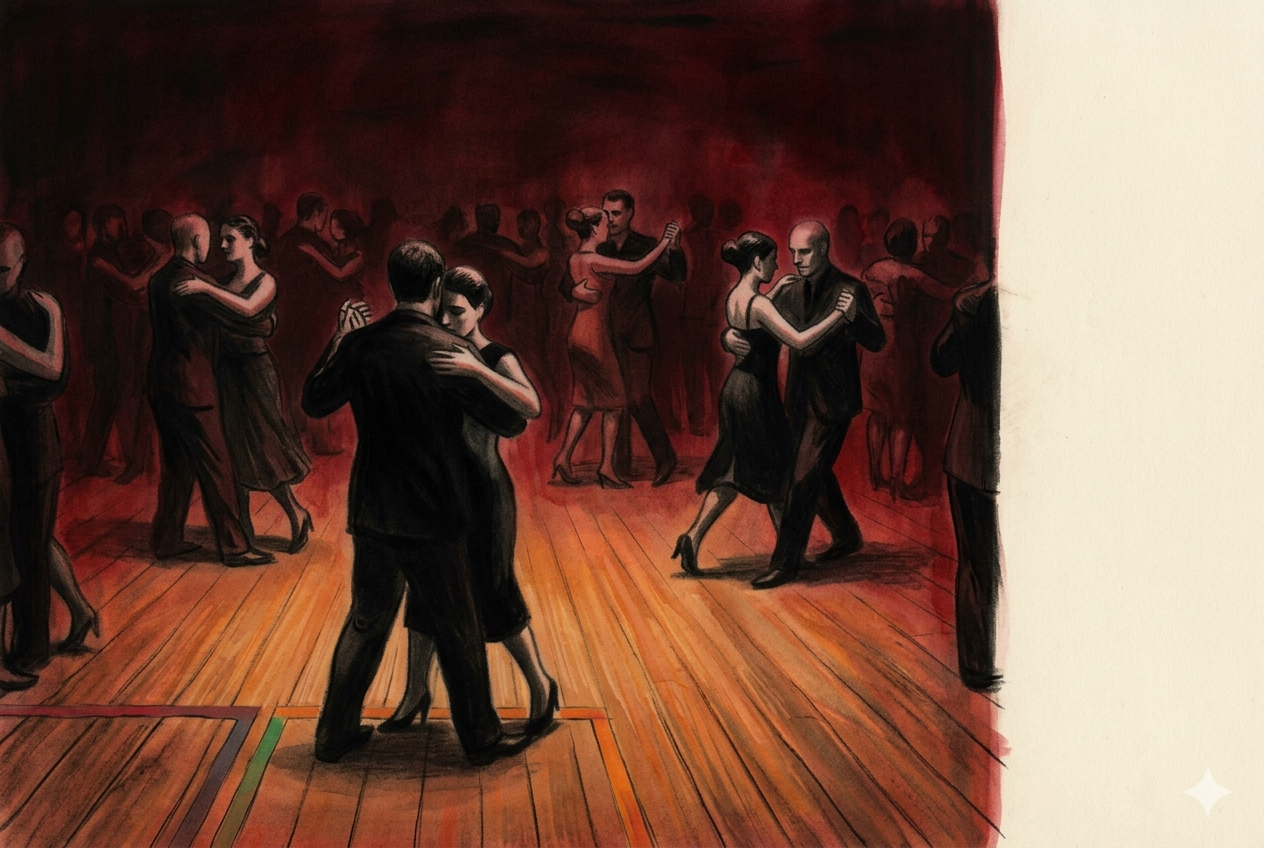
Thirty strangers. One weekend. A tango-LARP where dance was the only language.

What it felt like to play

You arrive knowing neither tango nor your character. By the end of the weekend you will know both.

The workshop teaches you the steps. Then it teaches you something harder: how to say things with your body that you cannot say with words. You practice dancing heavy and light, open and closed, willing and reluctant. You learn that the lead is not control, it is an offer. And the follow is not submission, it is a response.

Then you meet your scene partner. Your character’s former lover, who now despises you. You have to dance together. He leads, soft and uncertain. You resist. He adjusts. You resist more. Something passes between you that has no name and needs none. You laugh afterwards because the moment was almost too much.

You build the town with tape on the floor. A main street, a church, a speakeasy with a back room. And a sleazy motel at the end of the strip. Everyone knows what dancing in there means. Nobody has to say it.

In the third act your former lover finds you again. He dances with you slowly, so slowly. Your character feels the relief of return. The song winds down and you stand together in silence, held.

The next song starts with a single loud note. He is gone. One movement, one beat, and he is across the floor with someone else. You stand alone in the middle of a passionate dance floor, surrounded by story that isn’t yours anymore.

Inside you are screaming: this is so good.


The design challenge

Dance had to be the heart of the game. Not decoration, not interruption, the core mechanic. That decision made everything harder.

Larp is a verbal medium. The moment you move the heart of the game into the body, most of your design tools stop working. You are essentially starting over.

At the same time we wanted to eliminate preparation entirely. No prior experience with tango. No prior experience with larp. No homework. Anyone should be able to walk in and play.

Both ambitions at once felt close to impossible.


What it opened up

The fusion worked because each form covered the other’s blind spot. What couldn’t be spoken could be danced. What couldn’t be danced could be said. Together they gave players access to emotional territory that neither medium reaches alone.

The workshop wasn’t preparation for the game. It was the beginning of it. By the time the game started, every character existed, every relationship was established, every corner of the town had meaning. The players had built all of it themselves.

We designed the structure. Three acts, a flaw, a possible fate. The players invented everything inside it.

That turned out to be enough. More than enough.

Fifteen years of product leadership

  • 2025 Hyme EnergyCleantech An AI scoring model with binary, auditable criteria for prospect screening. Four qualified leads from twelve.
  • 2024–25 BKVIndustrial machine learning Recharged the team and accelerated progress through strategy and personal leadership.
  • 2023 NightPayFintech Rescued the launch. Design research revealed the business’s first principles.
  • 2020–23 Karnov OnlineLegal tech Launched the Nordics’ largest legal product. Shaped strategy and strengthened collaboration.
  • 2016–19 Rubicon GamesEdtech Built team, funding and product from zero. Maths app backed by the Ministry of Education and private angels.