Casus Belli
What if the most dangerous enemy was sitting at your own table?
What it felt like to play
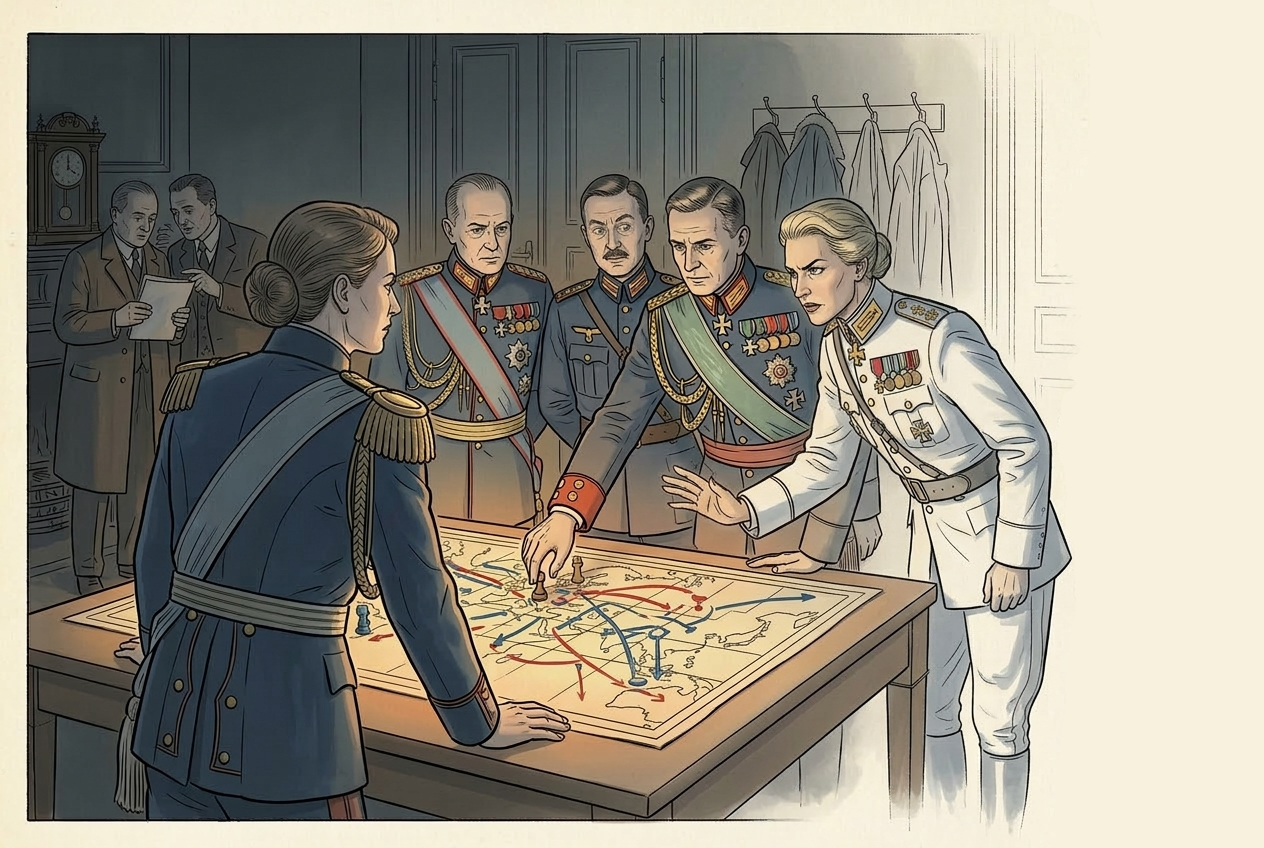
It is December 1914. Mother Russia has a plan.
England must fall. But Germany stands between you and glory, and so you do what empires have always done when the sword is not enough. You send a man with money and a smile.
Your diplomat crosses the room. Conversations are had. Hands are shaken. He returns with good news.
You mobilise. The Russian war machine moves west.
What happens next will be studied, argued over, and laughed about for the rest of the evening. England holds. Germany, it turns out, has not switched sides. Germany has simply taken the money. And somewhere in the chaos, your own diplomat has crossed the floor and accepted a medal from the German delegation.
He is standing there right now. Decorated. Beaming. Entirely at peace with his decisions.
You have been betrayed by your own foreign ministry, robbed by your allies, and crushed between two great powers.
You curse your former diplomat under your breath and focus. A new round has begun. You have twenty minutes to save your army. And now you also need a new diplomat.
The design challenge
Each country in Casus Belli was run by a team. The general commanded troops. The ambassador made alliances. The state councillor managed finances. The leader handed out medals.
Each role had real autonomy. And each player had their own definition of winning.
The question was whether a team with divided loyalties could function as a country at all, and what happened to strategy when the enemy could simply buy one of your colleagues.
What it opened up
Medals turned out to be the most powerful currency in the game. Not bribing a country, but bribing a person. One medal, one quiet conversation, and the most brilliant strategy in the room collapsed before it moved.
The game rewarded neither the best strategist nor the best diplomat. It rewarded whoever best understood that everyone at the table, including their own team, had a price.
We were surprised how much fun it was. Sometimes a game doesn’t need to change the world. It just needs to make you laugh at whoever just stabbed you in the back.